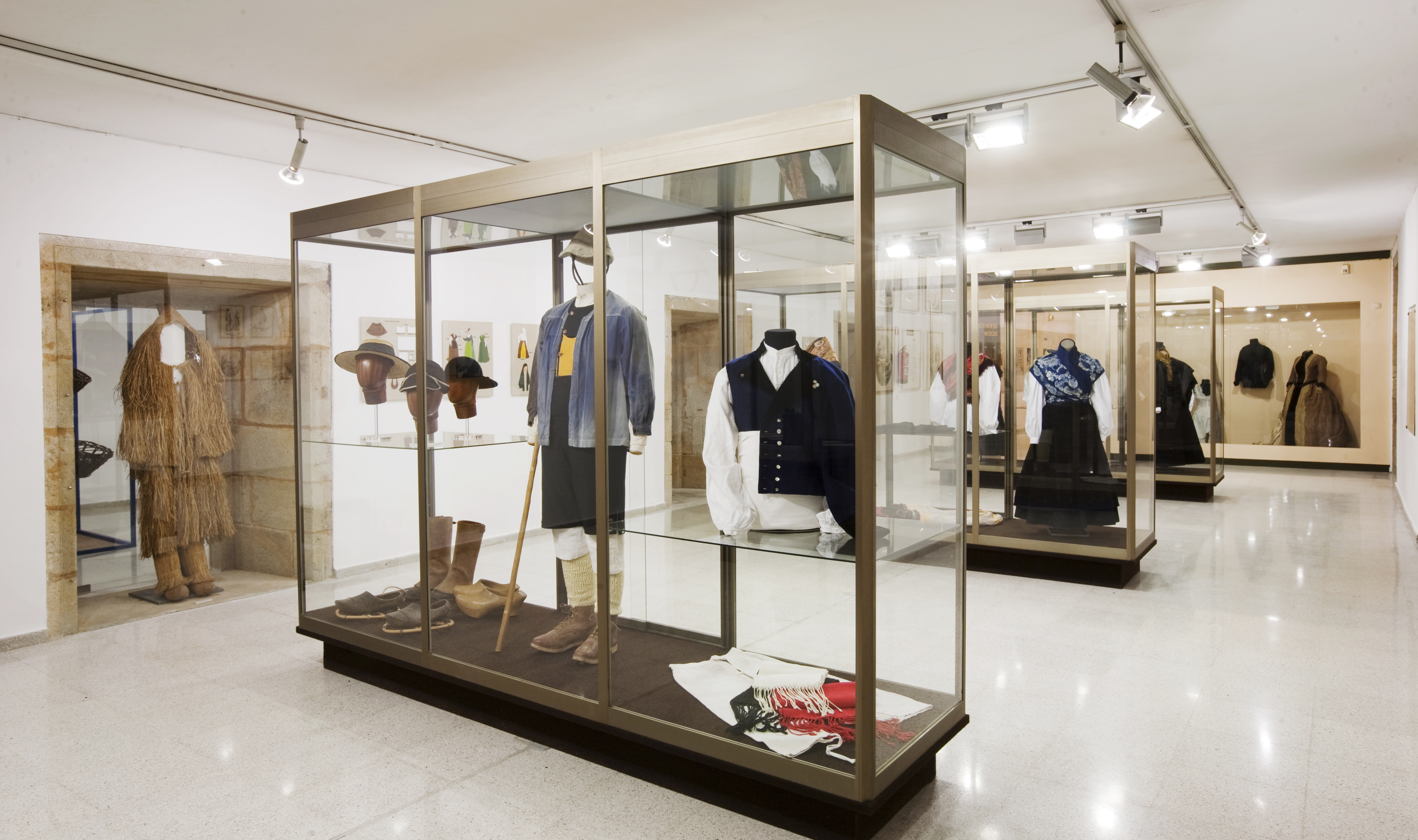
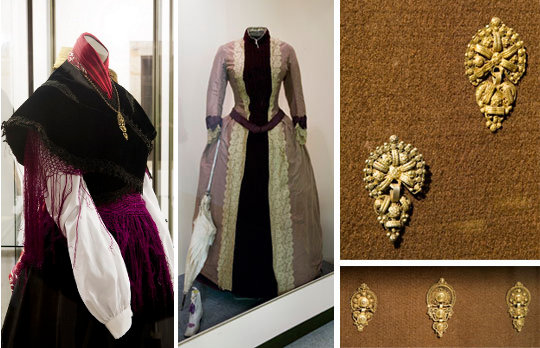
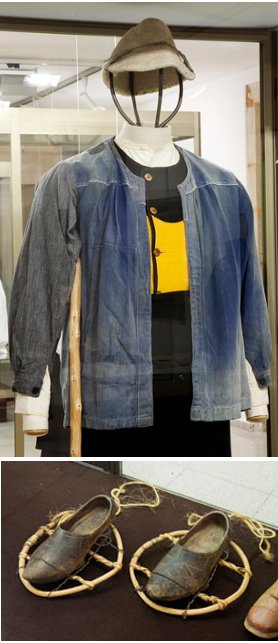
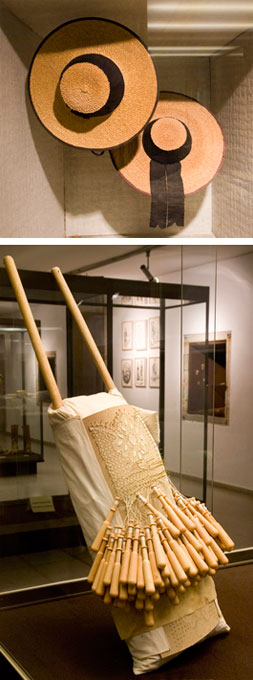
Traditional dress falls into two categories: everyday wear or working clothes and clothes for special occasions, this latter being much more intricate and richer than the first, both in quality of the fabrics as well as the variety and richness of ornaments and accessories.
Depending on the occasion, the area and the possibilities, the woman wore a blouse, petticoat, underskirt, full skirt, pinafore , dengue (a very narrow shawl, partly covering the back, with the long ends crossed over the chest and tied around the waist), waistcoat, bodice and a large 8 pointed shawl. On their heads they wore a headscarf, bonnet or mantilla . The men wore a shirt, breeches, trousers, waistcoat, jacket, sash, and a beret, montera (bullfighter hat) or flat cap on their heads. Footwear in both cases consisted of clogs for daily use and shoes with evening dress..
O traxe
From Tuesday to Saturday:
11:00 -18:00 hours
Sundays and holidays
11 - 14 hours
MONDAYS CLOSED
December 24 and 31, January 5: 11 - 14 hours
Annual closure:
January 1(New Year) and
December 25 (Christmas)
Ordinary ticket:
4 euros
Reduced rate:
1,50 euro (over 65, students over 18)
Free entrance:
Museum Members (companion 3 euros), students under 18 and unemployed
Groups of 6 or more:
3 euros per person
Temporary Exhibition visits:
Free
Free Entrance:
Sundays
May 18 (Museum Day)
July 25
October 29 (MPG annivers)
It is possible to arrange group visits by prior appointment


Virtual look at the museum requires installation of :
· QuickTime.  Download